
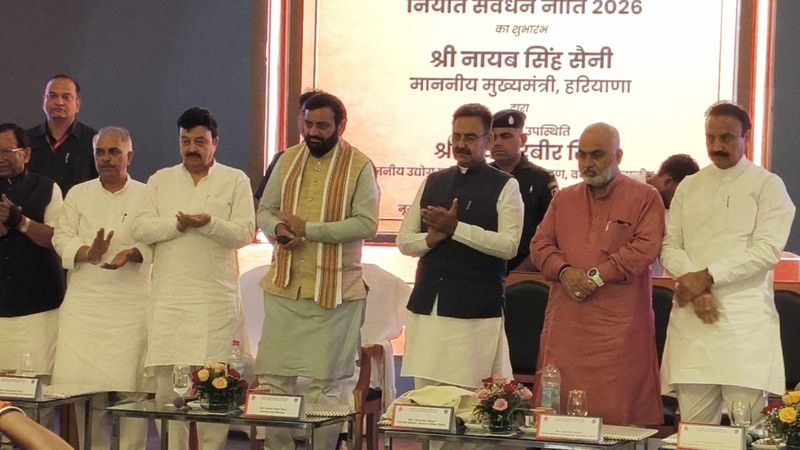
Haryana Chief Minister Nayab Singh Saini unveiled the Haryana Progressive MSME and Export Promotion Policy‑2026, aimed at strengthening micro, small and medium enterprises (MSMEs), boosting exports, and creating new opportunities for entrepreneurs. Framed under the vision of “Make in India – Make in Haryana”, the policy focuses on improving access to finance and technology, developing industrial infrastructure, and generating employment across the state.
Industrialists welcomed the initiative, noting its emphasis on balancing growth with sustainability. A dedicated Green Investment Fund has been introduced to encourage eco‑friendly investments and adoption of green technologies, enabling businesses to modernise while meeting international market standards.
Officials highlighted that Haryana is the first state in India to introduce a dedicated MSME policy. With 13.35 lakh MSMEs employing nearly 84.54 lakh people, the sector is already a major contributor to the state’s economy. Of these, over 3 lakh are manufacturing units, nearly 5 lakh provide services, and more than 5.3 lakh are engaged in trading — underscoring the sector’s wide reach across both industrial hubs and smaller towns.
Karnal, known globally for agricultural implements and rice exports, was chosen as the launch site. Local industry leaders, including members of the Karnal Agricultural Implements Manufacturers Association (KAIMA), said the policy could help small manufacturers expand into international markets. Ravinder Dhall, former KAIMA president, noted Karnal’s machinery exports to over 125 countries, generating an annual turnover of US$500 million, with potential for exponential growth.
KAIMA advisers Som Sachdeva and Ravi Beri stressed that effective implementation — including timely incentives, modern technology, and export support — will be key to success. Association leaders Manish Gaba and Akshay Kataria called the policy a “new direction” for MSMEs, while Manoj Arora of the Karnal HSIIDC Industries Welfare Association emphasised the importance of industrial infrastructure and ease of doing business.
Haryana’s export profile remains diverse, with the United States accounting for over 26% of shipments, followed by Saudi Arabia, the UK, UAE, Iraq, Germany, France, Nepal, Bangladesh, and Mexico. The policy is expected to further strengthen these global linkages while opening new markets for Haryana’s enterprises.