
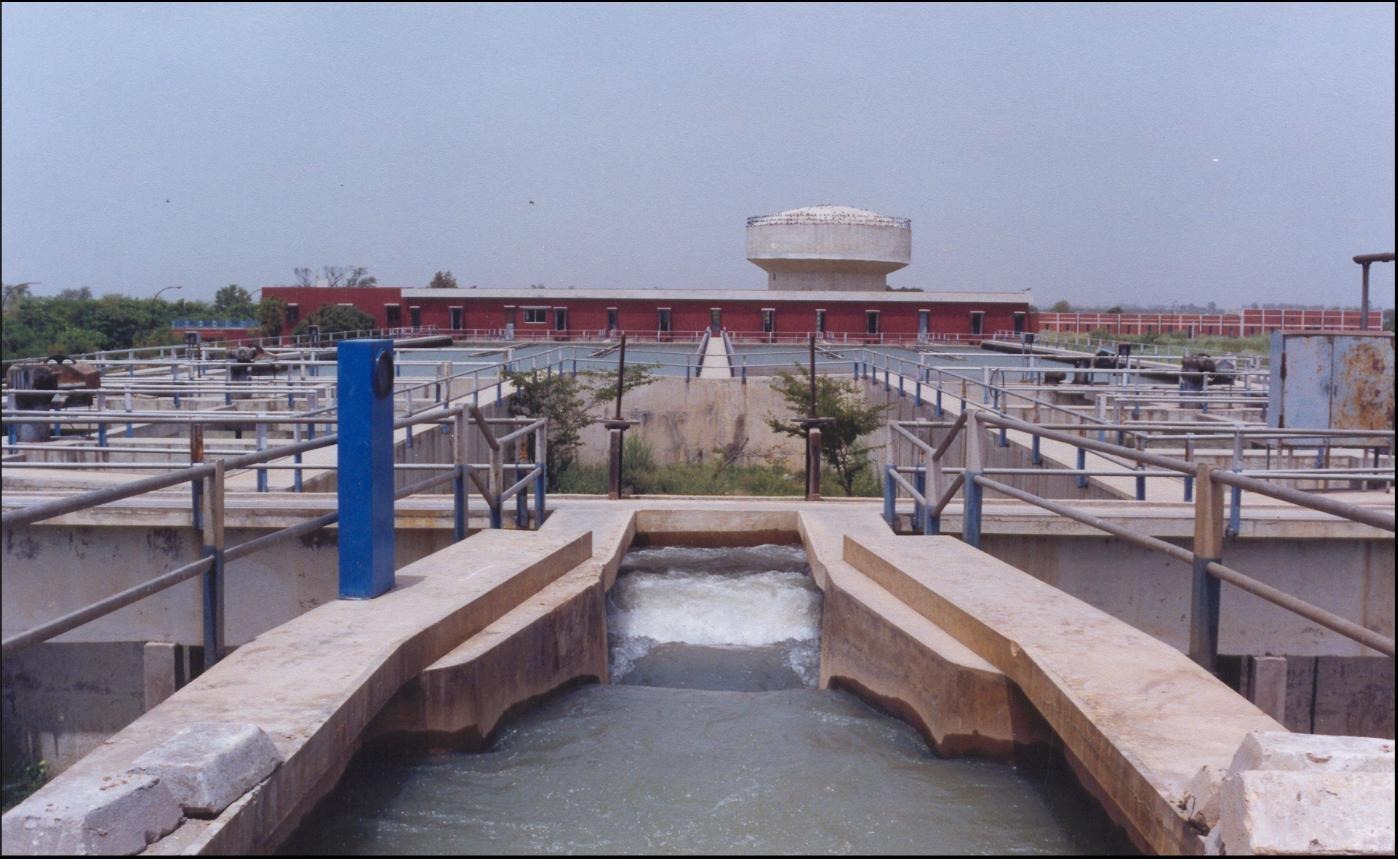
Haryana Chief Minister Nayab Singh Saini has directed the conversion of 466 old brick built waterworks into reinforced cement concrete structures at an estimated cost of around Rs 1,000 crore, with the aim of improving drinking water quality across the state.
Saini issued the directions on Tuesday while chairing a meeting with officers of the Public Health Engineering Department to review the state’s drinking water infrastructure. Public Health Engineering Minister Ranbir Singh Gangwa was also present at the meeting.
The decision has been taken particularly for waterworks where groundwater is mixing with stored water, resulting in increased levels of total dissolved solids, hardness and fluoride. According to the government, treating such water to make it suitable for drinking puts additional pressure on the machinery installed at waterworks.
The Chief Minister directed officials to give priority to converting such structures into RCC based facilities. He also ordered that tubewell based waterworks should be shifted to canal based water supply systems wherever feasible.
Existing water supply network
According to the Public Health Engineering Department, Haryana currently has:
• 1,888 canal based waterworks
• 4,199 boosting stations
• 12,404 tubewells
• Five Ranney Well schemes
The department has already handed over 3,674 tubewells to Gram Panchayats.
Work is also underway on 103 new canal based waterworks, 1,065 new tubewells, 369 new boosting stations and two new Ranney Wells.
1,525 km pipeline network to be replaced
The state has a total drinking water distribution network of around 7,005 km. Of this, 1,525 km of pipelines have been identified for replacement.
The government has set a target of replacing 837 km of the network by March 2027.
The pipeline replacement programme is part of the wider effort to improve the reliability and quality of drinking water supply in Haryana.
Focus on groundwater quality
Saini said providing safe drinking water is a priority for the state government and assured that adequate funds would be made available to ensure uninterrupted supply.
The Chief Minister said the measures being taken by the government are also expected to help improve groundwater levels in the coming years. According to him, efforts to address falling groundwater levels would also contribute to improving water quality.
He further directed officials to ensure that the capacity of newly constructed waterworks is planned according to future population growth, so that the infrastructure does not become inadequate as demand increases.
Why the RCC conversion matters
The main concern behind the conversion is the mixing of groundwater with stored drinking water. Where this happens, the quality parameters such as TDS, hardness and fluoride can rise. The government believes that upgrading the affected waterworks will reduce the pressure on treatment machinery and help provide safer drinking water.
The project, estimated at Rs 1,000 crore for 466 waterworks, is therefore part of a larger upgrade of Haryana’s drinking water infrastructure rather than a standalone construction programme