Breathlessness is often dismissed as mere tiredness. A persistent cough is blamed on changing weather. Wheezing is brushed aside until climbing a flight of stairs becomes a struggle. By then, many patients have already developed serious lung disease that requires prolonged hospitalisation or even major thoracic surgery.
Punjab’s latest treatment data under the Mukh Mantri Sehat Yojana (MMSY) shows that chronic lung diseases are not affecting only the elderly. A large proportion of patients requiring hospital care belong to the state’s working-age population, highlighting the growing health and economic burden of respiratory illnesses.
The National Heart, Lung, and Blood Institute (NHLBI) says that chronic lung diseases usually develop over time. They rarely disappear on their own. The earlier they are diagnosed, the better the chances of slowing the damage. Medication helps. Pulmonary rehabilitation helps. In serious cases, thoracic surgery can save lives. Waiting is not a good strategy. Unfortunately, waiting is exactly what many patients do when treatment is beyond their reach.
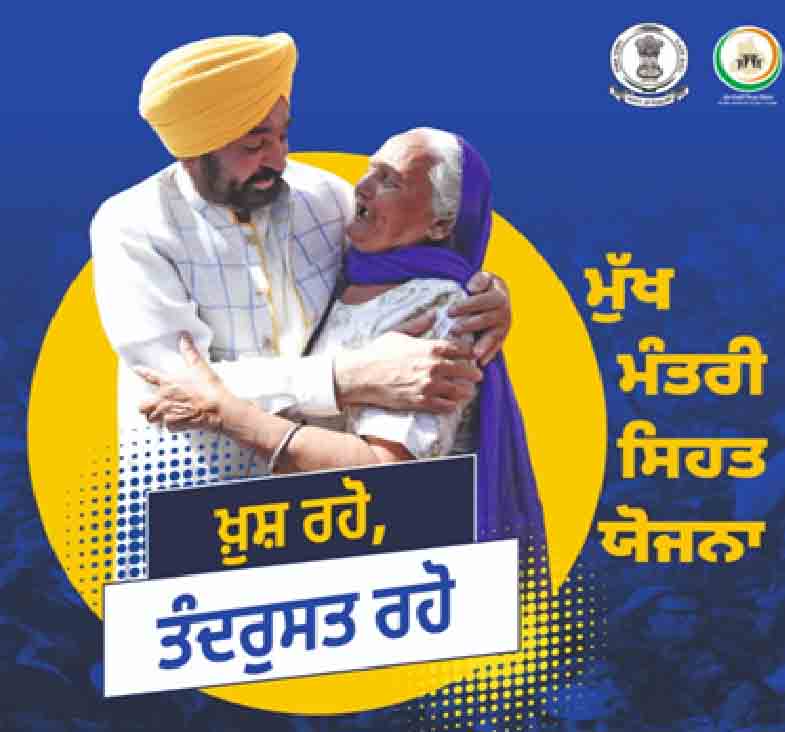
Data shared by the State Health Agency (SHA), Punjab, under the Mukh Mantri Sehat Yojana, the universal healthcare scheme led by Chief Minister Bhagwant Singh Mann, showed that between 8 January and 21 July 2026, 14,032 people received treatment for Chronic Lung Diseases and Thoracic Surgeries / Respiratory Care. State Health Agency data suggests cashless claims worth ₹37.30 crore. Behind every claim is someone who managed to enter a hospital without first wondering how to arrange lakhs of rupees. That changes everything.
The data reveals that adults between 36 and 60 years accounted for 5,559 treatment cases, while 5,659 senior citizens also required hospital care. Together, these two age groups represented more than 80 per cent of all respiratory treatment episodes covered under the scheme. Another 2,522 young adults and 292 children also received specialised respiratory care.
The gender-wise data shows that 8,345 men underwent treatment worth ₹22.79 crore, while 5,684 women received treatment worth ₹14.50 crore. Three beneficiaries from the ‘Other’ gender category also availed cashless healthcare under the scheme.