
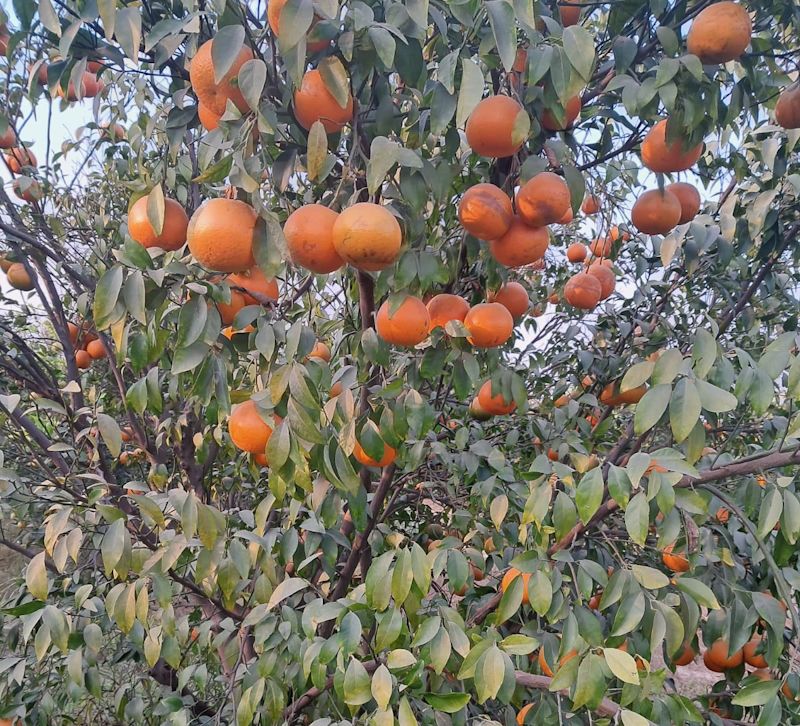
Punjab, already the country’s largest producer of kinnow mandarin, is steering its fruit economy towards low seeded and near seedless varieties in a bid to strengthen processing capacity and expand export markets. The move follows the release of PAU Kinnow 1, a low seeded strain that averages about 3.4 seeds per fruit and is being seen by experts as a potential game changer for the state’s horticulture sector.
Scientists believe the new variety could significantly improve juice recovery, consumer preference and international marketability, helping Punjab transition from bulk production to value driven trade.
Kinnow cultivation remains the backbone of the state’s fruit economy, contributing nearly 1.32 million tonne annually and occupying around 47 per cent of the total fruit growing area. Growth has been supported by favourable agro climatic conditions, strong institutional backing and the increasing entrepreneurial approach of farmers.
Introduced at the Regional Fruit Research Station in Abohar in 1956 and recommended for commercial cultivation in 1968, kinnow has witnessed a dramatic expansion over the decades. The area under the crop has surged from nearly 500 hectares in 1970 to about 49,000 hectares in 2023 to 24.
“Its superior quality, high yields and adaptability have made it the preferred choice for farmers,” said HS Rattanpal, Head of the Department of Fruit Science at Punjab Agricultural University.
Punjab’s cool winter nights play a crucial role in giving the fruit its distinctive golden yellow colour, rich flavour and high juice content. Deep alluvial soil along with an extensive canal irrigation network further enhances productivity, with yields touching up to 200 kg per tree under efficient management practices.
The university has also standardised several post harvest technologies including waxing, grading and cold storage to maintain quality during transit. More than 40 waxing plants are currently operational, enabling the fruit to travel longer distances in both domestic and overseas markets.
“Post harvest innovations have extended shelf life and boosted exports. This has transformed kinnow cultivation into a distinct agro industry,” said Gurteg Singh, Principal Fruit Scientist at the university.
Despite its success, the traditional kinnow’s high seed content has long been viewed as a hurdle for large scale juice processing and exports. PAU Kinnow 1 is expected to bridge this gap by aligning production with global consumer preferences.
“Seedless or low seeded mandarins are the future. PAU Kinnow 1 opens new opportunities for global trade,” Rattanpal said.
At present, Punjab exports kinnow primarily to Russia, countries in the Middle East, Nepal and Bangladesh, while Sri Lanka and Thailand are emerging as promising destinations. Experts maintain that stronger farmer producer organisations and expanded processing infrastructure will be key to stabilising incomes and reducing post harvest losses.
With the cultivation area increasing by roughly 1,000 hectares each year, Punjab appears well positioned not only to consolidate its leadership within India but also to move closer to becoming a global hub for premium mandarin production.