
As the LPG supply crisis deepens across several parts of the region, many households, particularly in rural areas, have begun shifting temporarily to electricity and traditional fuels for cooking. The shortage has forced families to look for alternatives such as balan and other burning materials, while rising prices of coal and firewood have added to the financial strain on households.
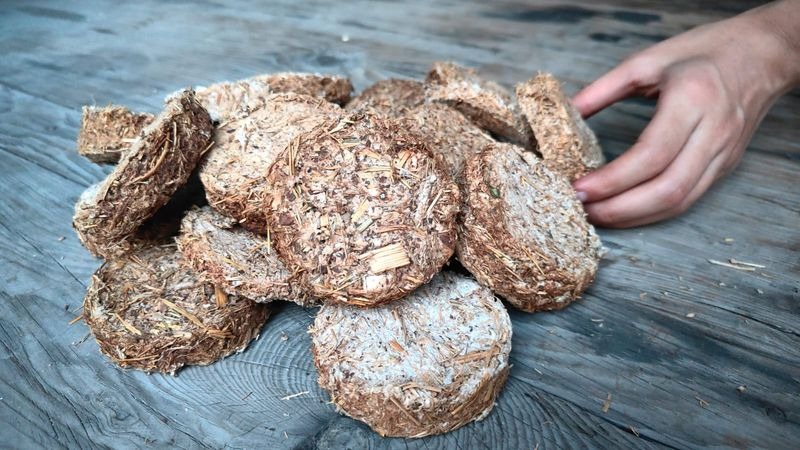
Amid the crisis, an Amritsar based government school teacher, Sanjeev Sharma, has started encouraging students and local residents to explore bio based fuels as an alternative energy source. Sharma, a vocational teacher at Government Senior Secondary School, Jabbowal, runs a science club where students are developing sustainable projects that convert paddy straw, agricultural residue and kitchen waste into biofuel briquettes and pellets that can be used for energy needs.
Sharma said the idea is based on the principle of reducing waste while generating affordable fuel. According to him, biofuels are both sustainable and cost effective because they rely largely on waste materials. Along with producing fuels such as ethanol from farm waste and sugarcane residue, his team has also been converting paddy straw and other agricultural waste into briquettes that can be used as a source of green energy.
Students associated with the school project are also collecting waste materials from the campus and nearby farms to produce useful items. Using the concept of “reduce, reuse and recycle”, organic waste from the school kitchen and surrounding areas is segregated, dried and compressed to create natural fibres, which are then converted into pellets and briquettes for fuel.
The initiative has already earned recognition, with Sharma’s team receiving awards at the Wipro Earthian Awards and the National Children’s Science Congress for their sustainable innovations.
Sharma said he drew inspiration from reports of biogas plants being revived in several villages across the country. He explained that materials such as cow dung, kitchen waste, dried leaves, waste paper, sawdust and agricultural residues can be used to produce briquettes through simple processes. These biofuel briquettes can then be used in biogas or pellet based stoves for cooking.
Experts say that around 2.6 kilograms of biomass per day can substitute LPG consumption for a typical household. Sharma added that compressed agricultural residues like rice husk, sawdust and straw can also be used in specially designed pellet cookstoves that allow cleaner combustion.
He noted that while biofuel briquettes may have a lower calorific value compared to coal, they are cleaner and can be produced easily at the household or community level. According to him, these fuels could act as a short term solution during periods of LPG shortage.
Sharma also suggested that government schools could adopt such sustainable fuel options if the supply crisis continues. He said that using locally produced biofuels could help ensure that school kitchens continue to function smoothly and that mid day meal programmes are not disrupted.