
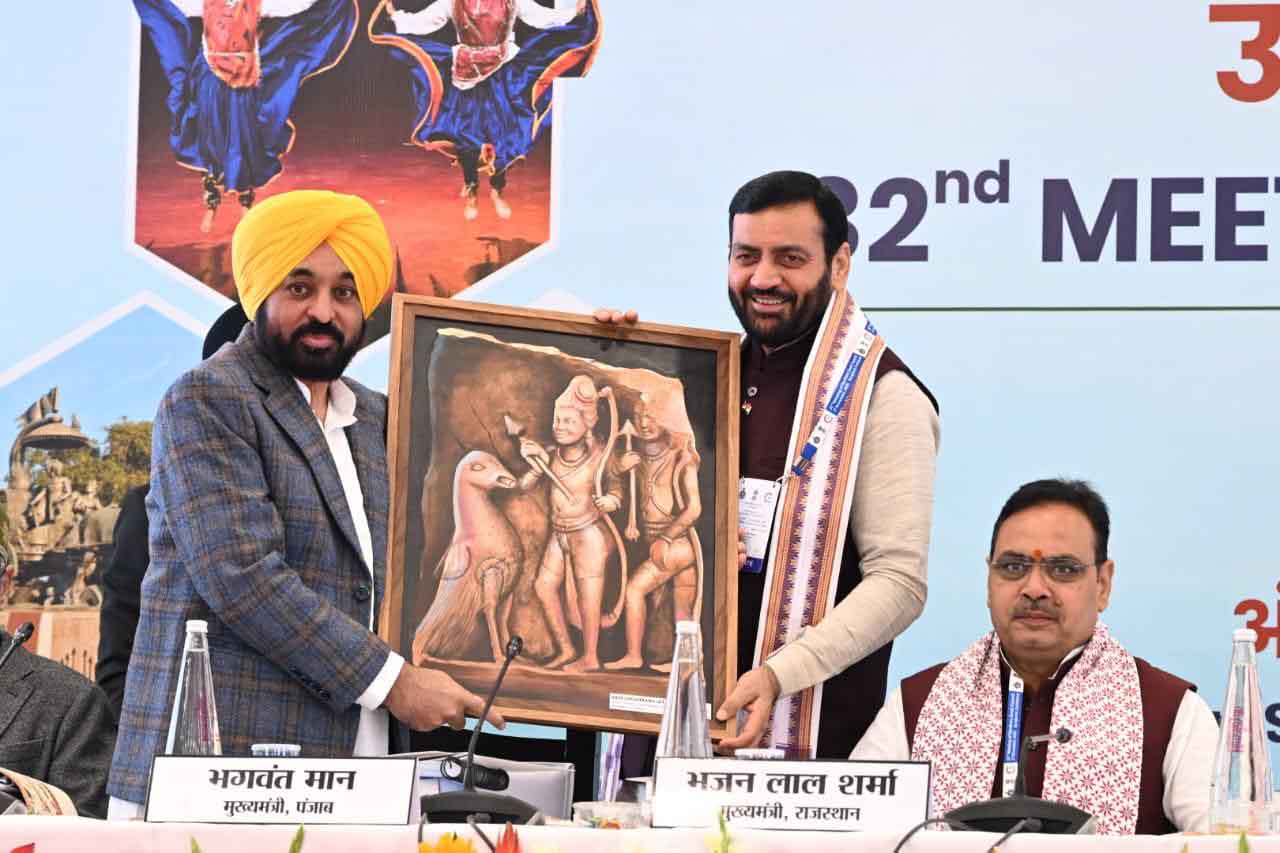
Punjab Chief Minister Bhagwant Singh Mann walked into the 32nd meeting of the Northern Zonal Council with a firm resolve. Before Union Home Minister Amit Shah and representatives of neighbouring states, he forcefully restated Punjab’s long-standing claims over Chandigarh, Panjab University, and the state’s river waters. For Mann, these were not mere administrative issues, but matters tied to the pride, identity, and future of Punjab.
He reminded the council that both the 1970 Indira Gandhi Agreement and the 1985 Rajiv–Longowal Accord clearly promised Chandigarh to Punjab.yet the commitment remained unfulfilled. The delay, he said, had wounded Punjabi sentiments for decades. Mann also demanded restoration of the 60:40 staffing ratio in Chandigarh’s administration, warning that recent exclusions of Punjab cadre officers violated established conventions.
Turning to river waters, Mann stressed that Punjab’s resources were dwindling and no surplus existed for the SYL canal. He insisted that all decisions must wait until a scientific reassessment and the Ravi–Beas Tribunal’s final verdict. With the Indus Water Treaty suspended, he urged the Centre to explore diversion of western river waters to benefit Indian states.
Flood management was another pressing concern. Punjab, having suffered repeated disasters and massive financial losses, opposed raising the water levels of Bhakra and Pong dams. The real solution, Mann argued, lay in desiltation and shared responsibility among states.
He defended Panjab University’s autonomy and Punjab’s historic connection to it, questioning Haryana’s sudden desire for affiliation after fifty years. He also raised alarms over increasing weapon smuggling from within India, calling it a grave security threat.
Despite the challenges, Mann highlighted Punjab’s achievements free power, healthcare, education, modernized schools, and expanding Aam Aadmi Clinics. Recalling the state’s resilience after devastating floods, he said Punjab’s spirit remained unbreakable. Concluding, Mann called for a stronger federal structure, cooperation among northern states, and respect for Punjab’s rights essential, he said, for true national progress.