
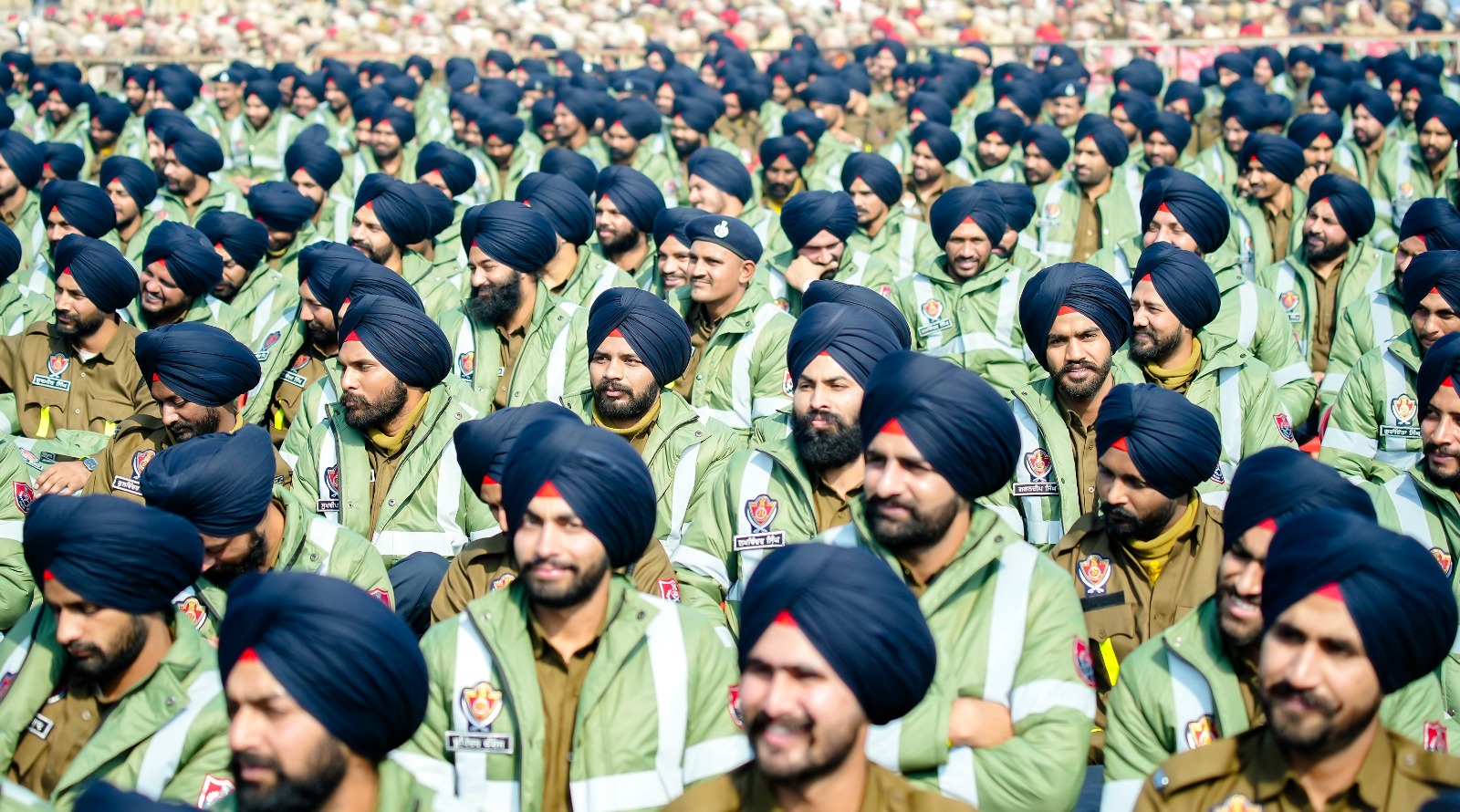
As of August 2025, the Punjab government announced that the state’s Sadak Suraksha Force (SSF) has saved more than 35,000 lives since its inception in January 2024. According to official data, the SSF responded to over 19,500 accident situations across Punjab within its first year and continues to provide rapid trauma intervention along the state’s highways.
Crucially, the deployment of the SSF has led to a 45.55% drop in road accident fatalities during the period from February to October 2024. In those months, the number of deaths on highways fell from 1,686 in 2023 to 918 in 2024, according to state records. Chief Minister Bhagwant Mann has attributed this dramatic decline to the impact of the SSF’s real-time intervention and technology-enabled patrol network.
From Crisis to Control: The Rise of SSF
Launched on January 27, 2024, the Sadak Suraksha Force represents Punjab’s bold response to the long-standing problem of road accidents and delayed trauma care. The idea was to build a force that could function with the precision and urgency of paramedics, supported by the reach and authority of police enforcement.
Prior to SSF’s launch, road safety enforcement in Punjab was fragmented, with inconsistent patrol coverage and delayed emergency responses. Recognizing these gaps, the government conceptualized SSF as a specialised, full-time road safety and emergency intervention force.
Infrastructure and Deployment
The SSF’s infrastructure is extensive and systematically distributed across Punjab’s vast road network, comprising National and State Highways.
Key Operational Infrastructure:
- Fleet: 144 specially-equipped vehicles:
- 116 Toyota Hilux pickup trucks
- 28 Mahindra Scorpios
- Each stationed at 30-km intervals along major highways.
- Personnel: Approx. 1,568 trained officers, including 90+ women responders, operating in three shifts of 8 hours each to ensure 24/7 coverage.
- Command Structure: Each vehicle has a 4-member team led by an Assistant Sub-Inspector (ASI), supported by centralised monitoring and dispatch from the Punjab Road Safety Command Centre.
The “Platinum Minute”: Rapid Emergency Response
One of SSF’s standout achievements has been its ability to reduce average response time to accidents to just 6 to 8 minutes, a critical window now dubbed the “platinum minute.” This swift response often makes the difference between survival and fatality.
Each SSF unit is trained to:
- Secure the crash site
- Offer immediate first aid and oxygen
- Stabilize critical patients
- Communicate with the nearest trauma centre
- Evacuate victims efficiently using onboard medical equipment
Technology-Driven Rescue System
Technology is at the heart of SSF’s operations. The vehicles are outfitted with tools to support both accident prevention and post-accident response:
- Speed radar guns and AI-assisted cameras to track and deter overspeeding
- Breath analyzers for on-spot DUI checks
- Crash investigation kits and body-worn cameras for incident documentation
- GPS tracking, live video feeds, and real-time command centre coordination
- Hospital connectivity systems to alert emergency rooms before arrival
Additionally, the SSF command-and-control room uses AI-based monitoring and integrates with Punjab’s existing road surveillance infrastructure to dispatch teams even before emergency calls are placed, based on sensor alerts and camera feeds.
Lives Saved: What the 35,000 Figure Represents
According to CM Bhagwant Mann and official state communications, the Sadak Suraksha Force has saved over 35,000 lives since its formation. These include:
- Victims of highway accidents who received timely medical aid
- Patients stabilized at crash sites before hospital admission
- Individuals rescued in situations of head trauma, fractures, or uncontrolled bleeding
- Passengers in overturned or multi-vehicle collisions
These are not merely symbolic claims. Data collated by the state’s Road Safety Secretariat shows that the SSF intervened in over 19,500 accident situations in its first year alone. Over time, as the fleet expanded and systems matured, the cumulative impact rose to more than 35,000 effective rescues and assists.
Decline in Fatalities: Data Highlights
Aside from the overarching 45% reduction in statewide road deaths, granular data provides further validation:
- 16% drop in fatalities was recorded during the first five months of 2024 in high-incidence districts such as:
- Hoshiarpur
- Khanna
- Fatehgarh Sahib
- Kapurthala
- According to internal records from the Punjab Transport Department, more than 300 accident-prone black spots were neutralised through a mix of SSF intervention and road engineering.
- These outcomes have been independently audited by IIT Delhi’s TRIP Centre and Punjab Engineering College (PEC), Chandigarh, reinforcing credibility.
Training and Oversight
The effectiveness of SSF owes much to its multi-tier training approach, encompassing:
- First-aid and trauma care training in partnership with Red Cross India
- Soft-skills and crisis communication training
- Exposure to international best practices in road safety through collaboration with institutes in California, Australia, and Hyderabad
- Crash scene documentation and legal training to support post-accident FIRs and court proceedings
The teams are also evaluated monthly through command centre feedback, performance audits, and public satisfaction metrics. Punjab Police Headquarters works closely with the Road Safety Secretariat to maintain service quality.
Accountability and Transparency
To prevent abuse and ensure clean operations, the SSF’s entire system is digitally monitored:
- Body-worn cameras record every rescue and intervention
- All calls, dispatches, and response durations are digitally logged
- Dashcam footage is archived and used for post-incident review and traffic enforcement
- Mobile devices used by SSF teams are configured with pre-loaded checklists and reporting apps
The objective is to provide zero-delay, zero-leakage, and zero-corruption service at accident sites—setting a new benchmark in traffic policing in India.
Complementary State Initiatives
While the SSF has been the most visible change on Punjab’s roads, the state government has also rolled out allied initiatives to enhance the impact:
- Rectification of 750+ identified black spots through engineering changes—signage, reflective paint, rumble strips, crash barriers
- Launch of Intelligent Traffic Management Systems (ITMS) in urban clusters and toll plazas for speed and red-light monitoring
- Helmet and seatbelt enforcement campaigns with integration of e-challan systems
- Public outreach and awareness campaigns in schools, panchayats, and transport hubs on road discipline
- Emergency corridor protocols with hospitals to pre-book trauma beds for patients arriving via SSF units
- Capacity-building workshops for hospital staff to handle trauma cases better
- Monthly performance reviews shared publicly to increase transparency and public confidence
Challenges and the Road Ahead
Despite the impressive figures, challenges remain. Critics point out:
- The 35,000 lives saved metric, while credible, lacks granular public disclosure
- Interior rural areas still lack immediate coverage compared to major highways
- Budget constraints could affect SSF’s future expansion if not ringfenced
However, the Punjab government maintains that it is already working on Phase II of SSF expansion to state rural roads and urban peripheries. A pilot project to include drones for remote site surveillance and ambulance pairing is also under consideration.
Additionally, the Road Safety Secretariat is in talks with medical colleges and private hospitals to develop an integrated trauma response grid that works seamlessly with the SSF network.
Conclusion: A Governance Success Story
With fatalities on highways dropping by more than 45%, over 35,000 lives saved, and accident response time reduced to under 8 minutes, the Sadak Suraksha Force is being lauded as a national model in road safety governance.
Chief Minister Bhagwant Mann has proposed that this model be studied and replicated by other states. Delegations from Haryana, Himachal Pradesh, and Madhya Pradesh have already conducted field visits to assess SSF operations.
Punjab’s roads, once notorious for frequent fatal crashes, are now being viewed as examples of intervention-driven safety transformation. As the state continues to invest in infrastructure and technology, the SSF stands as a clear reflection of what determined governance can achieve in saving lives, reducing grief, and restoring public trust in law enforcement systems.
The success of the SSF could very well be the foundation for a nationwide shift in how India tackles road safety, trauma care, and emergency response in the years ahead.